
If you’ve ever wondered how to increase Domain Authority, you’re not alone. Domain Authority (DA) is one of the most widely used SEO metrics for measuring the strength and credibility of a website.
Although Domain Authority is not a Google ranking factor, it is a useful indicator developed by MOZ to estimate how likely a website is to perform well in search engine results compared to competitors.
The good news is that improving your Domain Authority is possible with the right SEO strategy. In this guide, you’ll learn practical, white-hat techniques to improve your website’s authority over time.
What Is Domain Authority?
Domain Authority (DA) is a score developed by MOZ that predicts the relative strength of a website. The score ranges from 1 to 100, with higher scores generally indicating stronger authority.
A new website usually starts with a low DA. As your website earns quality backlinks, publishes valuable content, and improves its overall SEO, the score can gradually increase.
Why Is Domain Authority Important?
While Domain Authority does not directly influence Google rankings, it offers several benefits:
- Helps compare your website with competitors.
- Measures the overall strength of your backlink profile.
- Indicates the effectiveness of your SEO efforts.
- Builds trust with potential clients and business partners.
- Supports long-term website growth.
Improving your Domain Authority often reflects improvements in your site’s overall SEO health.
How to Increase Domain Authority
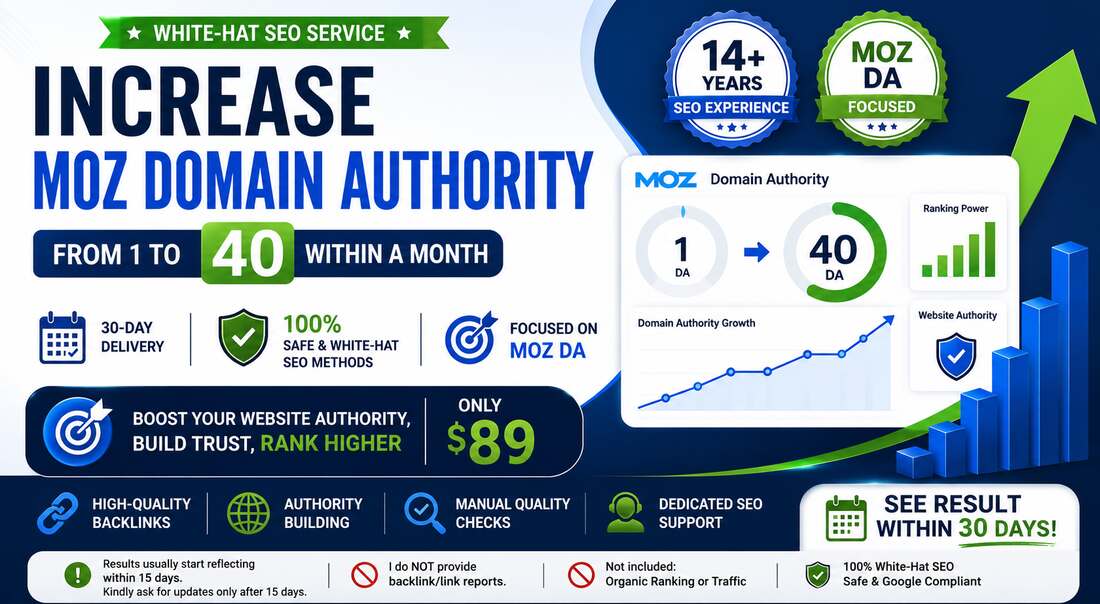
Below are the most effective methods for increasing your website’s Domain Authority.
1. Build High-Quality Backlinks
Backlinks remain one of the most important factors influencing Domain Authority.
Focus on earning links from:
- Trusted websites
- Industry blogs
- Business directories
- Relevant niche websites
- Editorial content
Quality always matters more than quantity.
2. Create High-Quality Content
Publishing valuable content naturally attracts backlinks.
Consider creating:
- Detailed guides
- Tutorials
- Industry case studies
- Research articles
- Helpful blog posts
Content that solves real problems is more likely to be shared and linked to by other websites.
3. Improve On-Page SEO
Proper on-page optimization helps search engines understand your content.
Optimize:
- Title tags
- Meta descriptions
- Header tags
- Internal links
- Image alt text
- URL structure
A well-optimized website supports stronger authority over time.
4. Fix Technical SEO Issues
Technical SEO improves website performance and crawlability.
Regularly check for:
- Broken links
- Duplicate content
- Missing meta tags
- Slow page speed
- Mobile usability issues
- Crawl errors
A technically healthy website creates a better experience for users and search engines.
5. Increase Website Trust
Search engines and users both value trustworthy websites.
Build trust by including:
- Contact information
- Privacy Policy
- About Us page
- Secure HTTPS connection
- Clear business details
These elements improve your site’s credibility.
6. Earn Links from Relevant Websites
Not all backlinks provide equal value.
Seek backlinks from websites that are closely related to your industry.
Relevant links tend to contribute more to a natural and authoritative backlink profile.
7. Remove Harmful Backlinks
Low-quality or spammy backlinks can negatively affect your website’s overall authority profile.
Regularly audit your backlinks and remove or disavow harmful links when appropriate.
Maintaining a clean backlink profile supports long-term SEO success.
8. Improve Internal Linking
Internal links help distribute authority throughout your website.
Link related pages together naturally to:
- Improve navigation
- Increase page discovery
- Help search engines understand your site structure
Strong internal linking also enhances the user experience.
9. Keep Your Website Updated
Fresh websites tend to perform better over time.
Regularly:
- Publish new blog posts
- Update older articles
- Refresh outdated information
- Improve existing pages
Consistent updates demonstrate that your website remains active and relevant.
10. Optimize Website Speed
A fast-loading website improves user satisfaction.
Ways to improve speed include:
- Compressing images
- Using browser caching
- Reducing unnecessary scripts
- Optimizing CSS and JavaScript
- Choosing reliable hosting
Better performance benefits both users and SEO.
11. Make Your Website Mobile-Friendly
Most users browse the web on mobile devices.
Ensure your website:
- Adapts to different screen sizes
- Loads quickly on smartphones
- Provides easy navigation
- Uses readable fonts
Mobile usability is essential for modern SEO.
12. Publish Shareable Resources
Create content that other websites naturally reference.
Examples include:
- Checklists
- Templates
- Free tools
- Original research
- Comprehensive guides
Useful resources often attract organic backlinks.
13. Build Brand Authority
A recognized brand is more likely to earn mentions and backlinks.
Increase your brand visibility through:
- Social media
- Guest articles
- Community participation
- Industry collaborations
Brand recognition can contribute to stronger website authority over time.
14. Be Patient and Consistent
Improving Domain Authority is a long-term process.
Rather than expecting immediate results, focus on consistent SEO improvements and quality content.
Sustainable growth produces more reliable outcomes.
15. Monitor Your Domain Authority Regularly
Track your progress using reputable SEO tools.
Monitoring your Domain Authority helps you understand whether your SEO efforts are moving in the right direction.
Evaluate trends over time instead of focusing on short-term fluctuations.
Common Mistakes That Prevent Domain Authority Growth
Avoid these common issues:
- Buying spammy backlinks
- Publishing thin content
- Ignoring technical SEO
- Using duplicate content
- Creating poor internal linking
- Neglecting website maintenance
Correcting these mistakes supports healthier website growth.
Frequently Asked Questions About Domain Authority
How long does it take to increase Domain Authority?
There is no fixed timeline. Improvements depend on your website’s existing authority, backlink quality, competition, and MOZ’s update schedule. Consistent SEO efforts generally produce better long-term results.
Does Google use Domain Authority?
No. Domain Authority is a metric developed by MOZ. Google has not stated that it uses Domain Authority as a ranking factor.
What is a good Domain Authority score?
A good score depends on your industry and competitors. Instead of aiming for a specific number, focus on improving your score steadily while building a stronger website.
Can a new website increase Domain Authority?
Yes. New websites can improve Domain Authority by publishing valuable content, earning quality backlinks, maintaining strong technical SEO, and following white-hat SEO practices consistently.
Final Thoughts on How to Increase Domain Authority
Learning how to increase Domain Authority requires patience, consistency, and a focus on quality rather than shortcuts.
By creating valuable content, improving technical SEO, earning relevant backlinks, strengthening internal linking, and maintaining your website over time, you can build a stronger online presence and improve your website’s authority.
Remember that Domain Authority is only one metric among many. The ultimate goal should always be creating a useful, trustworthy website that provides value to your visitors while following sustainable SEO best practices.